Robert Noble
Burscough Community Farm is becoming increasingly associated with Willow. We grow a large amount on site now, including basket-making varieties. We also use willow in large quantities for our arts and crafting activities.
Our area in West Lancashire is historically associated with Willows and basket making, and this history may be more recent than you’d think. I know that baskets were important to the shrimping industry in Southport and the potato growing farmers of our own area. So, when I had the opportunity to find out more about the industry from someone who was involved with it, I got my microphone out to record our conversation. This article is the result.
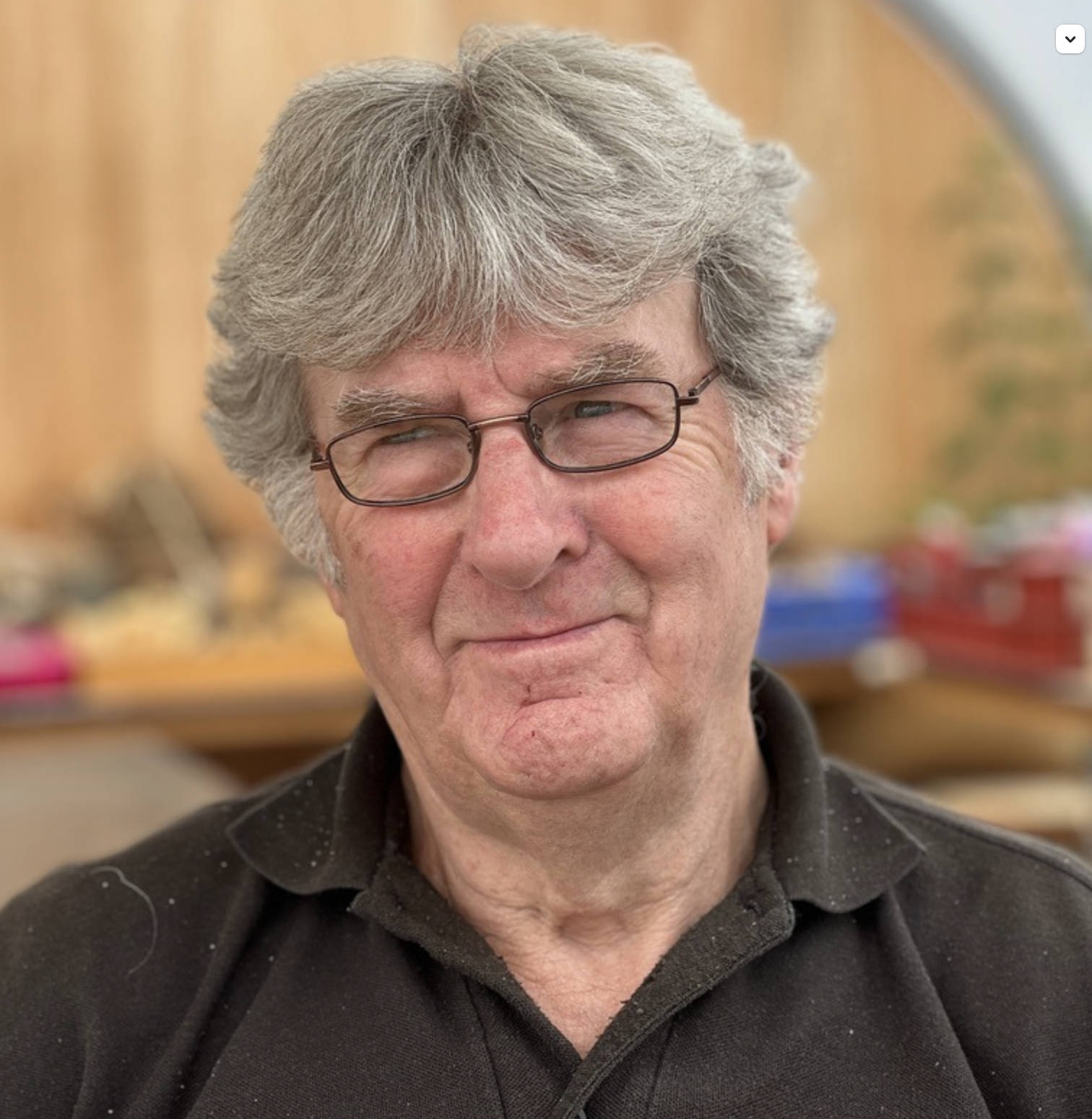
Robert Noble spent a decade at the heart of one of Lancashire’s most remarkable but forgotten industries. Starting as a warehouse worker at Alco Basketwork in Mawdesley in 1972, he witnessed firsthand the extraordinary transformation of traditional basket-making into a sprawling international enterprise. His role evolved from moving willow bundles in storage to becoming a delivery driver, taking him across Britain and Ireland with van-loads of woven goods. But Robert’s connection to the willow trade ran deeper than employment – his uncle Derek Noble was one of the industry’s most skilled craftsmen, a master basket maker whose expertise took him from rural Lancashire workshops to running willow farms in Somerset.
Through Robert’s eyes, we can see how in the fields and workshops of rural Lancashire during the 1960s and 70s, an extraordinary industry flourished that most people today would find hard to imagine. The willow basket trade wasn’t just a cottage industry – it was a sprawling commercial enterprise that connected small Lancashire villages to markets across Britain and Ireland, employed hundreds of people, and turned humble willow branches into everything from potato hampers to elegant lampshades.
Robert Noble’s recent interview reveals the remarkable scale of what was happening right under people’s noses in places like Mawdesley, Rufford, and surrounding villages. What started as traditional basket-making had evolved into something much bigger – an industrial operation that would make today’s logistics companies take notice.
An Industry Hidden in Plain Sight
When Robert joined Alco Basketwork in Mawdesley in 1972, he walked into a company that was already transforming from a simple basket-making business into an international operation. Founded by Alexander Coats, a traditional basket maker, the company had been taken over by his two sons who had vision that extended far beyond the local market.
“We ended up renting storage around Mawdesley and into Rufford – barns and chicken sheds, anywhere we could store natural willows or imported willow furniture,” Robert recalls. The scale was staggering: five or six enormous furniture vans making deliveries across the full length and breadth of the country, five and a half days a week. Storage facilities scattered across multiple villages. Air freight from China and Japan when radio advertisements created overnight demand for thousands of baskets.
This wasn’t just about traditional log baskets. The company had diversified into decorative lampshades, rush matting, shopping baskets of every conceivable size and shape, peacock chairs that hung on springs, and countless other products that rode the wave of 1960s and 70s fashion for natural materials. When pub food became popular, Alco supplied the rush placemats, scampi baskets, and woven lampshades that became ubiquitous in British pubs.
The Network of Home Workers
Perhaps most remarkably, this industrial-scale operation relied heavily on a network of home workers scattered across the Lancashire countryside. Robert would deliver bundles of willow wrapped in damp cloths to workers in Mawdesley, Blue Stone Lane, Blackmoor Road, and Bispham Green in the morning, then return the following evening to collect finished products – sometimes 20 or 30 perfectly woven lampshades from a single household.
“It was harder times then and people had to have a sort of second income,” Robert explains. “Basket making seemed quite fitting for a lot of people because they could do it at home in the evening, watching telly if they had one in those days, and at the end there was a little income.”
Even families of Italian heritage who had settled in the area after the war became part of this network, with wives taking on basket-making while their husbands worked on farms.
Derek Noble: The Master Craftsman
At the heart of this industrial success story was Robert’s uncle, Derek Noble, whose journey into basket-making began in the most unlikely circumstances. Partially sighted from a young age, Derek was taught willow basket-making at a school for the blind; a trade considered suitable for someone with severe visual impairment.
But Derek was no ordinary basket maker. He became so skilled and knowledgeable that when Alco decided to expand into growing their own willow, they bought a farm in Somerset and sent Derek to run it. This wasn’t just about making baskets anymore – Derek was overseeing the entire process from growing the willow to the finished product.
“Derek knew the business from the roots upwards,” Robert says. The farm operation was meticulous: willows were separated into different lengths – three foot, four foot, five foot bundles – and Derek was “very strict about the length of the canes.” The seasonal nature of willow cutting meant taking on labourers for coppicing, then moving them into manufacturing during quieter periods.
Derek’s reputation extended far beyond Lancashire. When he died, basket makers from across the industry attended his funeral, recognising the loss of a master craftsman. He had been one of the first to create willow coffins – a innovation that’s now become an established eco-friendly burial option. Fittingly, Derek was buried in a willow coffin himself, with a willow twig placed on top instead of a rose, in an unmarked grave at Mawdesley Church that he wanted to “stay green.”
The Technical Marvel of Traditional Craft
What’s striking about Derek’s work was how he combined traditional hand skills with industrial precision. Robert describes watching his uncle work: “He just sat on a cushion on the floor with a flat rotating tabletop in front of him… and he could weave all day with no measurements, just hand and eye coordination, and everything just worked.”
The baskets Derek produced were so precisely made they looked like they came from “a duplicating machine,” yet each was entirely handwoven with no nails, screws, or ties – just willow expertly woven to last decades. His hands told the story of his craft: “the muscles on his thumbs were enormous through weaving willows.”
Despite his visual impairment, Derek became the go-to person for custom work. Marketing people would approach him with sketches, and he’d create everything from bread baskets for Booths supermarkets to sculptural pieces for Cedar Farm where children could play. He continued weaving right until the end of his life, reportedly making baskets even while in his hospital bed.
The End of an Era
This remarkable industry came to an abrupt end around 1985-86 when the company went into liquidation, literally overnight. A business that had employed lots of people across multiple countries, operated its own farms, and maintained storage facilities across Lancashire simply ceased to exist.
The scale of what was lost becomes clear when Robert describes the final years: warehouses in Northern Ireland, regular ferry runs to Stranraer, deliveries throughout the Troubles, and a supply chain that stretched from Somerset willow farms to shops across Britain and Ireland.
A Lost World
Today, only fragments remain of this once-thriving industry. Stan Dalton, who grew willows on Sandy Lane and made baskets in a workshop at the bottom of Church Brow in Mawdesley, is remembered mainly through his son Frank’s childhood memories. The Italian families who supplemented their farming income with basket-making have long since moved on to other trades.
What Robert Noble’s interview reveals is not just the story of one successful business, but a glimpse into a lost economic ecosystem where rural communities could support substantial industries built around traditional skills. The Lancashire willow trade of the 1960s and 70s was perhaps one of the last examples of how cottage industries could scale up while maintaining their artisanal roots – until modernity, family disputes, and changing fashions swept it all away, almost overnight.
The irony is that Derek Noble’s innovation – the willow coffin – has outlasted the industry that created it, now offered by eco-friendly funeral services across the country. Perhaps that’s fitting for a man who wanted his own grave to stay green in the churchyard at Mawdesley.
Find out more about our ‘Willow To Weave’ project here.