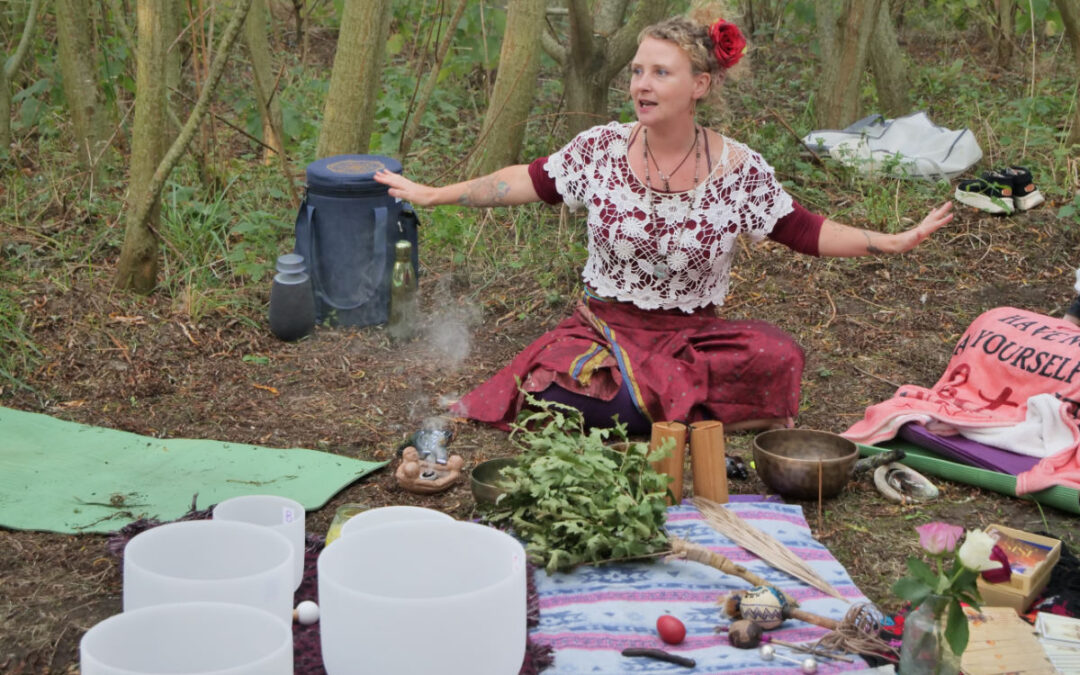
Jess Sawyer’s Sound & Forest Bath returns to the farm this April — and if you’ve been on the fence about trying it, this is a good moment to take the plunge. The last session sold out completely, and spaces for this one are already limited.
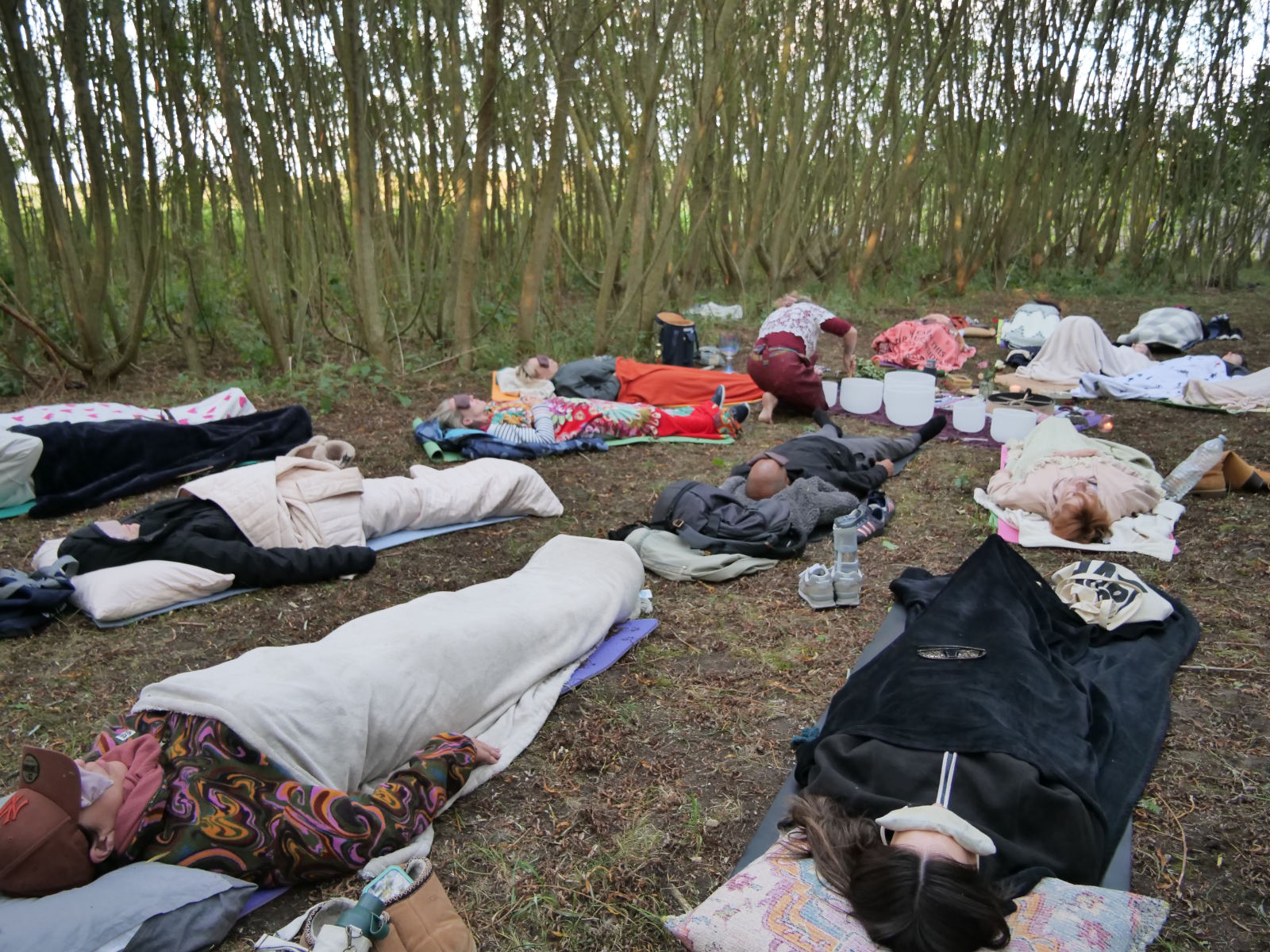
The format is simple. You come along on a Sunday morning, lie down in the willow grove, and spend an hour being immersed in sound while surrounded by trees. Jess plays crystal singing bowls, and the idea is that you don’t have to do anything at all — just receive it.
Alongside the sound bath itself, Jess will share some practical, take-home techniques for managing stress, and will incorporate Sekhem — a gentle form of energy work with roots in ancient Egypt — for those who are open to it. No experience or prior knowledge needed.
“A lovely way to spend a Sunday morning — outside, quiet, and surprisingly good for the mind.”
If it rains, there’s a warm indoor space on the farm that’s still fully surrounded by nature — so the session goes ahead, whatever the weather does.
Sound & Forest Bath with Jess Sawyer
Date – Sunday 12th April 2026
Time – 11am – 12pm
Spaces – Limited — last session sold out
Tickets at dandelion.events
So — do sound baths actually do anything?
Fair question. If you’ve never tried one, the whole idea can sound a bit unlikely. Here’s what the research actually says.
Sound baths are relatively new to scientific study, and researchers are careful to point out that more work is needed before anyone makes big claims. But the early findings are consistently pointing in the same direction.
A widely-cited study published in the Journal of Evidence-Based Integrative Medicine followed 62 adults before and after a singing bowl session. Participants reported significant reductions in tension, anger, fatigue, and low mood after just one session. Notably, the effects were strongest in people who had never tried it before — so sceptics may actually benefit most.
More recent research found that singing bowl sessions could be a useful intervention for people dealing with everyday anxiety. A separate review found reductions in distress, depression, and physical pain, alongside improvements in blood pressure and heart rate.
How does it work?
The most straightforward explanation is that your brain needs something to focus on to quieten down — and sound gives it that anchor. Unlike traditional meditation, which asks you to clear your mind, a sound bath gives you something passive to receive. You don’t have to concentrate or practise. You just listen.
Research suggests this may help shift the brain from its normal busy, alert state into slower wave patterns associated with calm and rest. Your body’s stress response starts to ease, and your nervous system gets a chance to properly relax — the kind of deep rest that can take years of meditation practice to access in other ways.
Add to that the outdoor setting — there’s solid evidence that time in natural environments lowers stress hormones and improves mood independently of anything else — and you’ve got two things working together that both have decent backing.
Who is it for?
Most people. You don’t need any background in wellness, meditation, or anything else. You just need to be willing to lie still for an hour — which, for many of us, turns out to be the hardest part.
People with certain serious psychiatric conditions are advised to check with their GP before trying intensive relaxation practices, as the same guidance that applies to meditation applies here. But for most people carrying the ordinary weight of a busy life, it’s a low-effort, low-risk way to give yourself a proper break.
Sound baths are a complementary practice and are not a substitute for medical or mental health treatment. If you have a serious health condition, please consult your GP before attending.